


Summary
In boxing culture, people often describe a fighter as ‘durable’ when they can stay calm under pressure and continue performing even in tough rounds. The real meaning of durability is not allowing punches to land freely but reducing damage through skill, strength, and composure.
True durability comes from conditioning, posture, timing, and controlled sparring. The goal is to train the body and mind to respond intelligently, not to soak up unnecessary punishment.
This guide explains how boxers develop resilience without risking long-term setback and how smart training improves both confidence and performance in the ring.
Key Takeaways
- Durability comes from strong fundamentals such as posture, defense, footwork, and conditioning rather than standing still and taking shots.
- Controlled contact, proper guard structure, and core stability help you handle pressure while keeping your body safe.
- Building durability is a gradual process involving technical drills, head movement, mental composure, and smart training habits.
1) Strengthen Your Core And Neck
Your core and neck play a major role in absorbing impact safely. A strong base prevents your head from snapping back and helps you maintain balance when punches land.
Good exercises include:
A stable core reduces the shock from body shots, while neck strength helps control head movement.
2) Improve Your Guard And Posture
Durability improves naturally when your defensive structure is strong. A good guard absorbs impact through your arms and shoulders instead of your head.
Always remember this: a solid guard is your final layer of durability.
3) Learn To Roll With Punches
Rolling punches reduce the force absorbed by your body. When you turn or move slightly with a strike, the energy disperses instead of landing flush.
Drills to practice:
These teach you to redirect force instead of resisting it head-on.
4) Develop Footwork And Evasive Skills
Durable fighters don’t survive by being hit. They survive by avoiding the hardest shots and controlling the distance. Practice footwork, and ring movements that’ll help you avoid them all while maintaining distance.
Shadowboxing and pivot drills make you lighter and more prepared under pressure.
5) Controlled Sparring Builds Composure
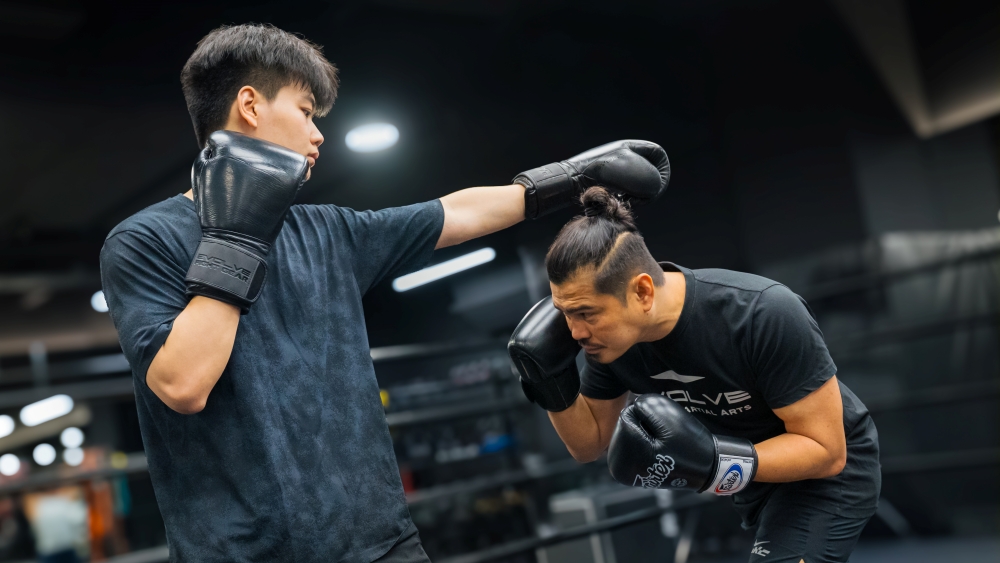
Sparring develops durability through controlled exposure, not heavy exchanges. Remember, everything is progressive.
You learn how to stay calm when punches come toward you progressively. Composure is a major part of durability.
6) Conditioning And Breath Control
Cardiovascular fatigue can make you feel less durable. When you are tired, even light punches feel heavier.
Good breath control keeps your body loose and reduces stiffness, which helps your body absorb pressure better.
7) Mental Toughness And Ring Confidence
Durability is as much mental as physical. Confident fighters react calmly to pressure, while tense fighters absorb more damage.
One of the best ways to build mental toughness and confidence is through visualization. With a gradual increase in the training intensity, you learn to stay relaxed under pressure.
8) Defense First, Durability Second
Durability should complement your technique, not replace it. A durable fighter still relies on defensive movements. Remember, you should only take shots if there’s no way to avoid/escape them. Ultimate Boxing is all about hitting and not getting hit.
Some key defensive movements you’ll need to master are:
When your defense improves, your need for durability decreases.
Common Mistakes
That being said, while we see many budding boxers developing durability differently, some of the common mistakes many encounter are:
- Trying to develop durability by taking unnecessary punches
- Sparring too hard, too early
- Neglecting neck and core strength
- Overexposing the chin
- Staying flat-footed under pressure
- Forgetting breath control
Durability should always come from skill and training structure, not absorption.
FAQs On Developing Durability For Boxing
Q: Can You Train Your Chin In Boxing?
A: Not directly. You build durability through posture, neck strengthening, defense, and movements. Letting people hit your chin is never safe training.
Q: Does Sparring Make You More Durable?
A: Yes, but only when done progressively and with control. Hard sparring too early increases injury risk.
Q: Does Physical Conditioning Affect Durability?
A: Definitely. Better conditioning helps you stay relaxed and reduces damage when punches land.
Final Thoughts
Durability in boxing is not about taking more damage. It is about developing the physical strength, technical skill, and calm mindset that keep you safe and confident in the ring. With strong fundamentals, smart sparring, and good conditioning, you can build real resilience without exposing yourself to unnecessary risk. The best fighters are durable because they are prepared, balanced, and composed from the first bell to the last.
You may also like:
Beginner’s Guide To Ducking In Boxing For Better Defense And Control

Summary In recent years, celebrity boxing and crossover fights have become common. Fans enjoy high-profile matchups, unusual pairings, and big personalities sharing the ring. Jake Paul has been at the center of this trend, taking…
Summary Ducking is a short, controlled lowering of your upper body to evade punches that come at head height, usually hooks or looping shots. Unlike slipping or leaning away, ducking keeps you close enough to…
Summary In Boxing, staying still makes you an easy target. Upper body movement helps you become unpredictable while keeping your guard intact. It connects directly to your offense, defense and counterpunching ability. Upper body movement…
Summary The L step is a movement pattern where you step diagonally backward and to the side, forming a “L” shape movement. It allows you to move off the centerline and create angles while maintaining…
Summary The uppercut is one of boxing’s most powerful and underrated punches. It travels vertically from underneath your opponent’s guard, targeting the chin or body. While it looks flashy, it’s also one of the most…
Summary Training bags have been a cornerstone of striking for decades. They allow athletes to practice timing, precision, and combinations without needing a live partner. In both Boxing and Muay Thai, bags are used not…
Summary Tawanchai PK Saenchai is one of the most electrifying Muay Thai fighters of this generation. Known for his sharp timing, smooth footwork, and devastating left kick, he has built a reputation as a calm…
Summary Head control refers to using grips, pressure, and positioning to control your opponent’s head and neck. In grappling, the head follows the spine, so when you control the head, you control the body. It…
Summary To many Brazilian Jiu-Jitsu practitioners, Lachlan Giles represents more than high-level skill. He represents thoughtful problem-solving, innovation, and the idea that technique can overcome size. His performances and teachings helped reshape how grapplers approach…
Summary Childhood is full of big emotions. Kids experience excitement, frustration, joy, confusion, and stress as they learn about themselves and the world. Emotional awareness is the ability to recognize and understand these feelings. It…
Summary The new year is the perfect time to reset your routine and start building healthier habits. While many people focus on diets, short-term challenges, or gym memberships, martial arts offers something deeper. It strengthens…
Summary The Harai Goshi is a fundamental throw in judo and a highly effective takedown used in Brazilian Jiu-Jitsu and MMA. It is recognized for its smooth sweeping motion and the power that comes from…